

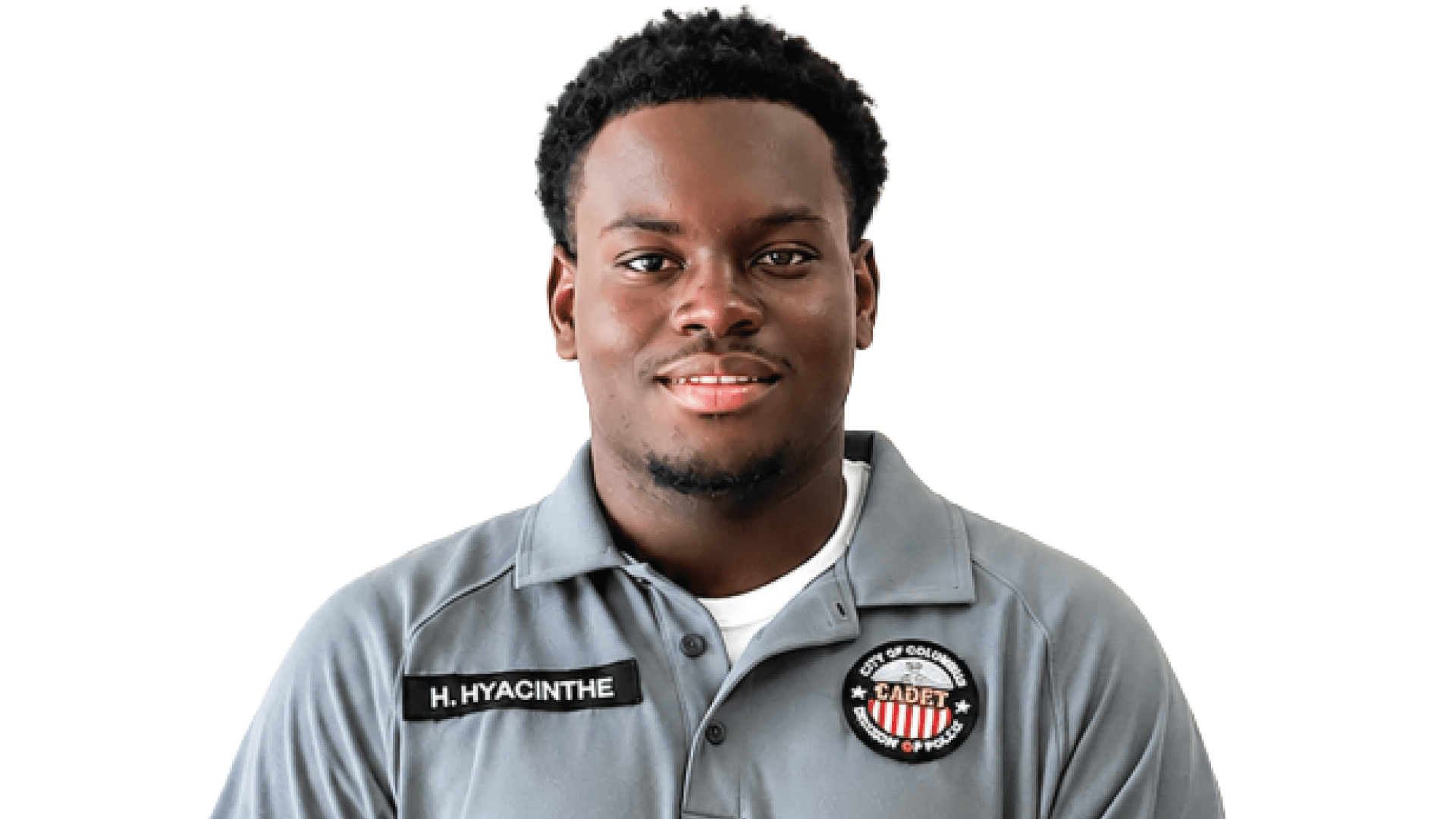
What sparked your interest in joining the Columbus Police Cadet Program?
It was my mentor, Officer Johnson. He was a great officer, and he had impactful moments on me. Also, because I want to serve and protect my community, so I just thought maybe becoming a police officer was a great idea.
As a child, did you always know this was the path you wanted to take?
No, I didn’t always have this idea. At first, I wanted to be a surgeon, but being in the cadet program, that changed my career path. Now, I just want to be an officer.
Aside from Officer Johnson, are there people in your neighborhood who inspired you or persuaded you to pursue law enforcement?
Not really. But my dad’s an officer, so he made an impression on me.
How old were you when you made the decision to be an officer?
That was after high school because at first, I didn’t know what to do. The Marines contacted me and were like, “You trying to join the Marines?” I was like, “Yeah, why not?” But I was 17 but needed to be 18 to sign yourself. I told my mom and she said no. I explored the cadet program as an option and am locked in.
What is the biggest misconception that teens have about police officers, and how do you hope to change that?
I feel like the biggest misconception that teenagers have about police officers is, like, they’re bad officers and there’s a lot of injustice, but it’s not true. Because I’ve talked to great officers, and that’s one of the reasons why I want to become an officer. I want to be the positive change, making positive differences and changing their perspective on officers.
What is the most challenging physical or mental hurdle you have overcome?
I will say balancing my time between school and the cadet program. It was really hard for me to do my homework, study my directives, the ten codes, my core values and all.
As a cadet, you’re a part-time employee. How do you balance this demanding program with your personal life as a teenager?
The way I balance my work life and my personal life is after work, I make sure I have everything ready. I go out with friends, socialize and remain a positive person.
How do you plan to use your unique youth perspective to connect with other young people in Columbus?
I plan on talking with them, having conversations, what it is to be a police officer, also, how to make better life choices.
Once you turn 21 and take the civil service exam to become a sworn officer, what kind of legacy or impact do you want to leave on our city?
I want residents of our great city to know that officers are here. They’re heard. We’re here to protect and serve them.
That’s my whole purpose of being an officer, making sure people are treated right, there’s justice, and everything’s safe.
What advice would you give to other teenagers who are interested in law enforcement but aren’t sure where to start?
I would tell them there’s a great program called the PSC program. It’s between the age of 14 to 18. It’s every Monday and Wednesday, and they get exposed to policing, what it’s like to be an officer, and what you must study to become an officer. I’ll encourage them to check it out, and if they’re interested, then follow your career path as an officer.
Now that you’re in training, what is one thing about police work that surprised you the most compared to what you see on TV and the movies?
There’s a lot more paperwork as an officer because there are certain rules and regulations you must follow. But in the movies, they don’t really show you that. You just go on a scene in movies, but it takes a lot more time, especially when you’re doing DVs (domestic violence calls). I heard a DV case, takes up to five hours. I just feel like movies make it seem like everything’s fast-paced, but it’s not.
Comments
Sign in to comment New here? Create a free account.
Please follow our community guidelines. Every comment is checked by an editor before it appears.